Measured in Flat Whites
The most useful unit of time I own is roughly nineteen minutes — one flat white, not rushed.
Field note · 20 November 2025 · 3 min read
In Dublin, we measured time in pints. A pint of Guinness is roughly twenty minutes of conversation — enough for a topic and a half, maybe two if you're efficient. A long evening runs five or six, and the decisions made on the fifth are the ones you actually stand behind in the morning. The pint is a social unit. It structures things without announcing it's doing so.
I've been in Auckland long enough to have found the equivalent.
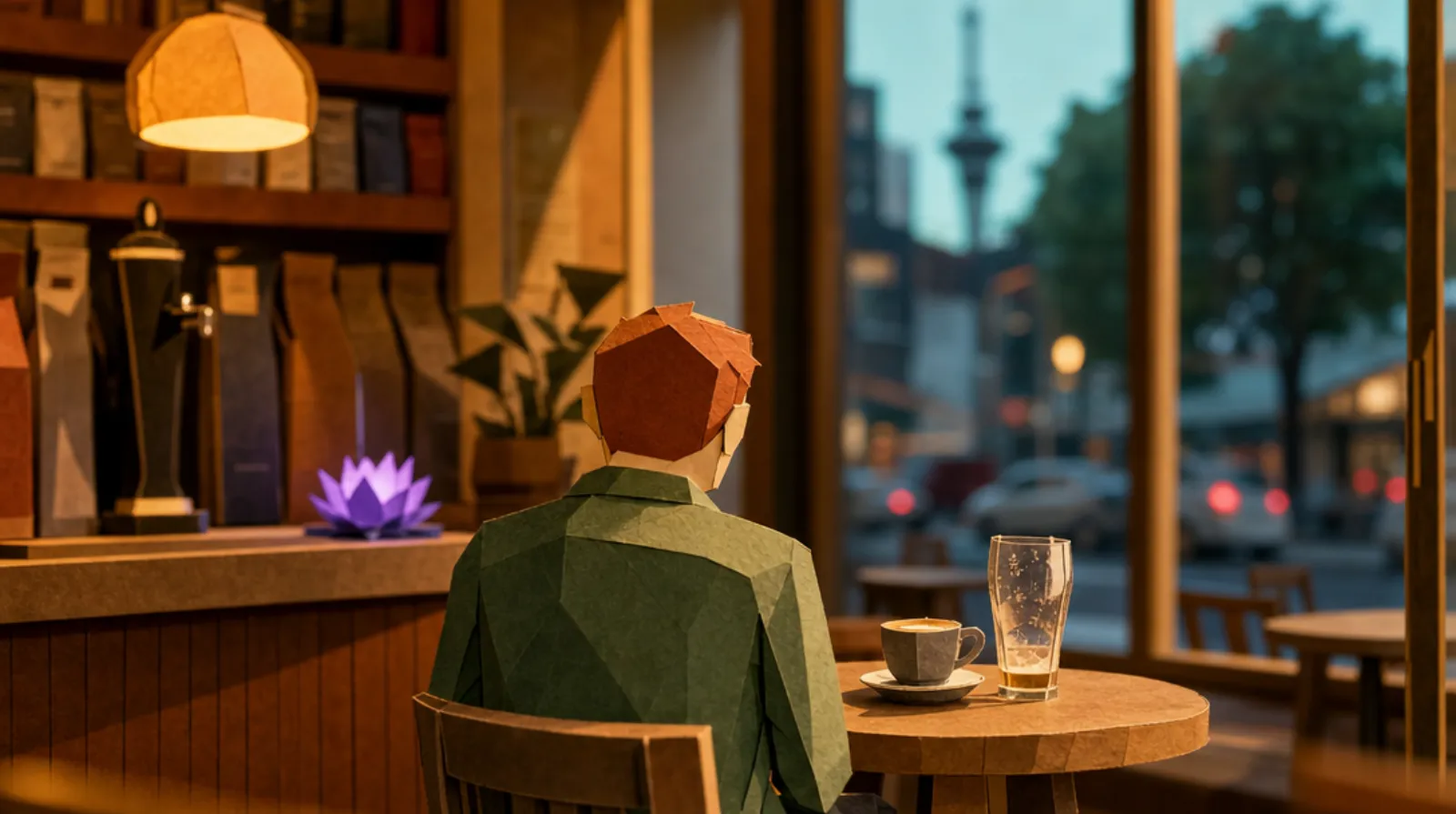
The flat white, done properly: small, made with genuine attention, served at a temperature that doesn't require you to wait. In the better cafés on Ponsonby Road they take this seriously in a way that never stops being faintly startling if you grew up in a country where coffee came from a jar. Four minutes to make. Fifteen to drink, if you're not rushing. Nineteen minutes total — and in my experience, exactly enough time for one thought, properly held.
I've started measuring my days in these.
Three flat whites is a morning with shape
A productive morning is three. One before anything demanding. One at the point where the work turns difficult. One — and this one matters — at the moment you notice you've been staring at the same sentence for ten minutes and should stop before you do something you'll need to undo.
That's not a morning with hours. It's a morning with a beginning, a middle, and a natural end. Roughly an hour of structured attention spread across what the day actually requires. I'd take that over a calendar full of ninety-minute blocks with nowhere to breathe.
The afternoon cup is permission, not fuel
A good afternoon is different from a productive afternoon. Considerably harder to engineer.
One flat white, taken without an agenda. Lighter in purpose than the morning ones. You sit with it. There's nothing you're supposed to be finishing. The coffee cools — and a good flat white should be allowed to cool — and the time passes without you doing anything to it.
This is what I mean by leisure, which isn't the same as rest and isn't the same as being simply too exhausted for anything else. Leisure is time looked at and set aside — not left over, not earned, just claimed.
Most people I know are bad at this. I'm bad at it too, left to my own devices — the phone appears, the inbox makes its case, and a flat white of time becomes nineteen minutes of email, which is always worse. The central irony of slow travel — the thing I keep returning to in Wander With Purpose — is that it's easier abroad than at home. In a place you don't know, with a language that requires effort, you're accidentally present. Back home you have to engineer it.

Stay until it cools
The trick is to be somewhere that commits you to the coffee.
You've ordered it. It's in front of you. Leaving early would be a statement about your own character you're not prepared to make. So you stay. The flat white cools. The afternoon does what it likes. Outside on Ponsonby Road, people pass with somewhere to be.
I've already been.