It Was Never in the Itinerary
Every trip's best moment is the one you didn't plan — the broken-down bus, the wrong turn, the village that wasn't on the map.
Essay · 1 May 2026 · 5 min read
The bus to Castelo de Vide broke down at half eleven on a Tuesday, somewhere in the Alentejo where the heat already had plans for your afternoon. The driver — a man of about sixty in a polo shirt that had survived considerably more than it deserved to — stepped out, lit a cigarette, and began what appeared to be a private negotiation with the engine. The engine, from what I could tell, was not inclined to settle.
There were eight of us on the bus. A Dutch couple with matching rucksacks and the specific energy of people who've already found an alternative route on their phones. An older woman with a basket of something fragrant and a calm that suggested this sort of thing happened regularly and was not, in her view, a problem. Me, with a dead phone, a Saramago novel I'd been meaning to read since 2019, and nowhere in particular to be at two o'clock.
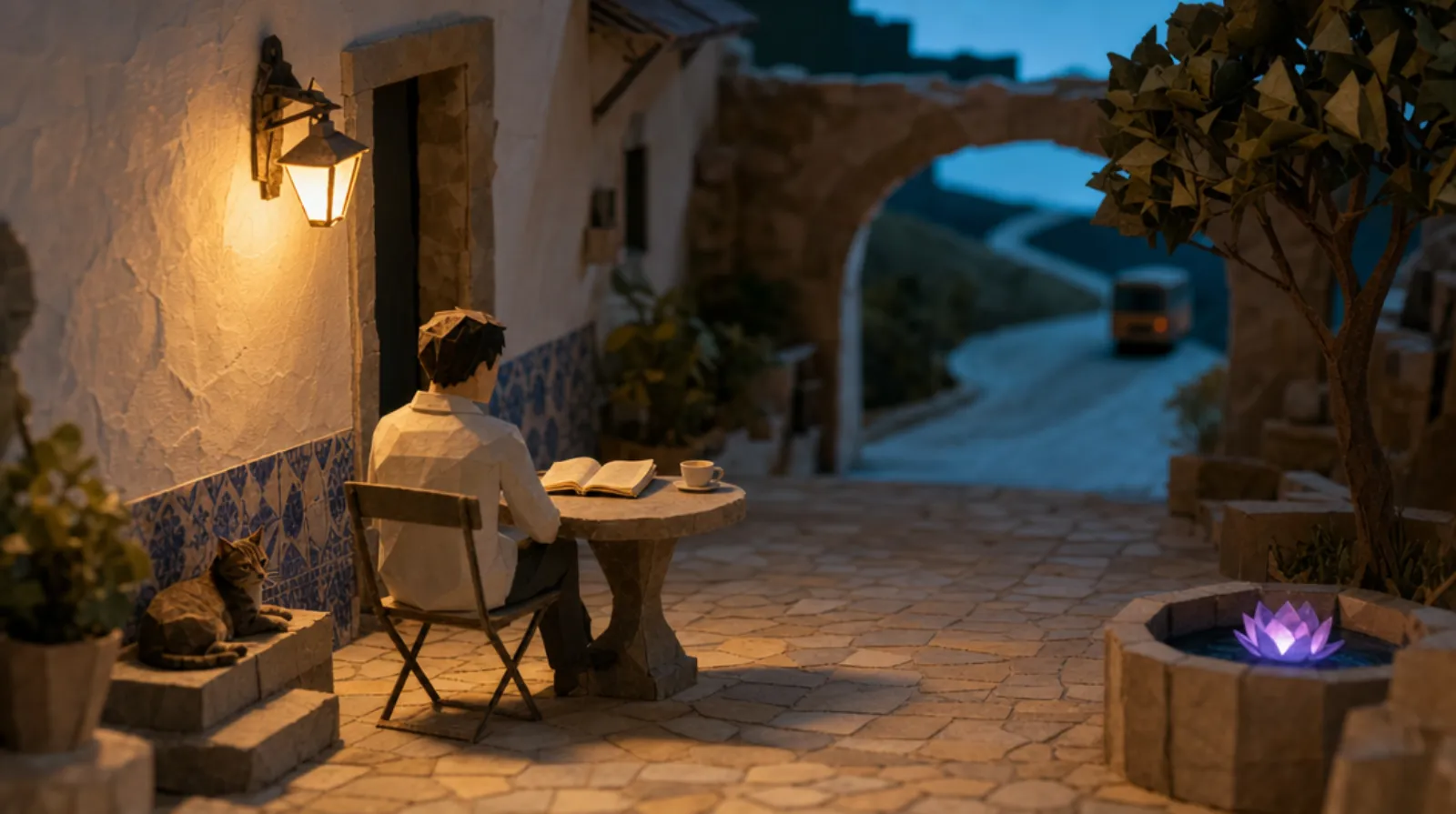
The village we'd stopped beside had a square, three cork trees, a café, and a cat on the one bench with the aspect of someone who owns the place. The Dutch couple returned to the bus after ten minutes. The woman with the basket disappeared behind a blue door. I ordered coffee and sat down.
Two old men at the next table were playing cards. They looked at me once — the kind of look that takes a full accounting in about three seconds — then went back to the game. A dog appeared from somewhere and lay down in the shade. The engine was not going to cooperate before two o'clock at the earliest.
About forty minutes in, I realised I was exactly where I wanted to be.
Here's the problem with itineraries: they work as hard at managing your anxiety as they do at planning your travel. The plan isn't only about the places — it's also about the comfort of knowing what comes next, the small relief of feeling organised. You've done the research, booked the beds, identified the things to see. You've pre-lived the trip from a laptop in November. And then the bus breaks down and the village appears and the card game is going, and it turns out the scaffolding was built around something that would have been perfectly fine without it.
I started travelling properly out of Dublin in my early twenties, underfunded and approximate, the way you do when the bus to Holyhead is twelve quid on a Wednesday. No apps. A Lonely Planet already out of date when I bought it secondhand. The plans dissolved constantly. They were almost always better for it.
Some of the best conversations happen after the engine fails
The disruption is not the problem. It is, fairly reliably, the opening.
There was a ferry stuck off the Aran Islands one April — engine trouble, which is usually how these things begin, because engines understand disruption in a way we've mostly forgotten. We drifted for two hours while the crew worked. The Atlantic was grey and enormous and not remotely interested in our schedule. I talked to a woman from Connemara who spent the crossing explaining her sister-in-law's ongoing dispute with a planning authority in Galway, which is not the sort of conversation you put in a calendar. By Inis Mór, I knew considerably more about Irish planning law than I'd set out to, and I was grateful for every word of it.
You don't put that afternoon in a calendar. You can't book the next one either.
The places that stay with you were never on the list
The ones you're still describing at someone else's dinner table ten years on — the ones that are out of your mouth before you've consciously decided to tell them — are almost never the scheduled ones.
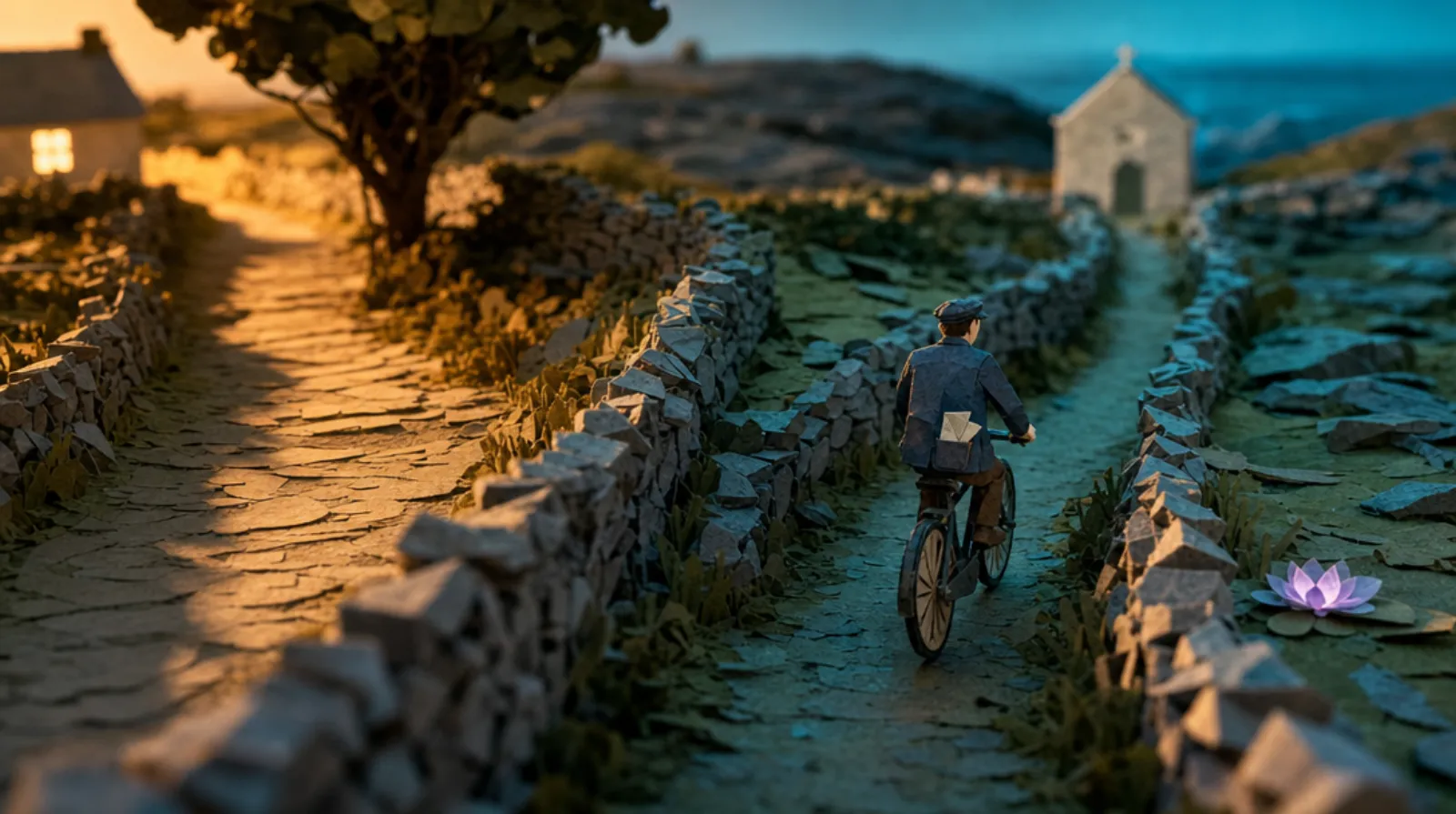
I've done the monuments. I've stood where I was supposed to stand and looked at the things I was supposed to look at. I remember them the way you remember films watched on planes: vaguely, without texture. The specificity belongs to the accidents. A pastry shop in a town I couldn't find again on any map. A thunderstorm in Oaxaca that drove everyone under the awning of a pharmacy, where someone produced a bottle of mezcal from somewhere and the afternoon stopped making plans for itself. A wrong turn on a bicycle outside Kyoto that led to a small temple with nobody in it at all.
These things require a particular kind of structural failure. They happen in the gap the plan leaves open — or, more reliably, in the gap the plan doesn't manage to close.
Write it in pencil
Slow travel isn't a pace. It's a structural looseness — treating the itinerary's collapse as information rather than disaster.
There's a distinction I keep coming back to: between the things that reduce logistics friction and the things that reduce serendipity. These are not the same operation. A tool that handles the bus timetable so you don't miss the last one is genuinely good — it frees up attention for the thing you're actually there for. A tool that pre-processes every decision, leaving you executing a plan rather than encountering a place, is a different proposition. The logistics should disappear. The encounter should remain.
The heuristic I use on myself: would this moment be worth slowing down to photograph? Not for any feed — just because reaching for the camera is how I notice I've stopped being present. The card game in the Alentejo. The Atlantic grey outside the ferry window. The temple with nobody in it. These were worth slowing for.
The bus breaks down. Grand. What's here? The plan is the scaffolding — it got you somewhere to begin. Once the thing starts, it can go.
---
The driver lit a third cigarette. The cat moved to a better patch of shade.
I read forty pages of Saramago — forty more than I'd managed in four years. The Dutch couple sat in the bus and waited for the two o'clock.
The afternoon, when it came, was perfect. None of it was planned.