Ask, Then Tell
The fastest way to learn something isn't to be told it — it's to attempt the answer before the information arrives.
Guide · 31 January 2026 · 6 min read
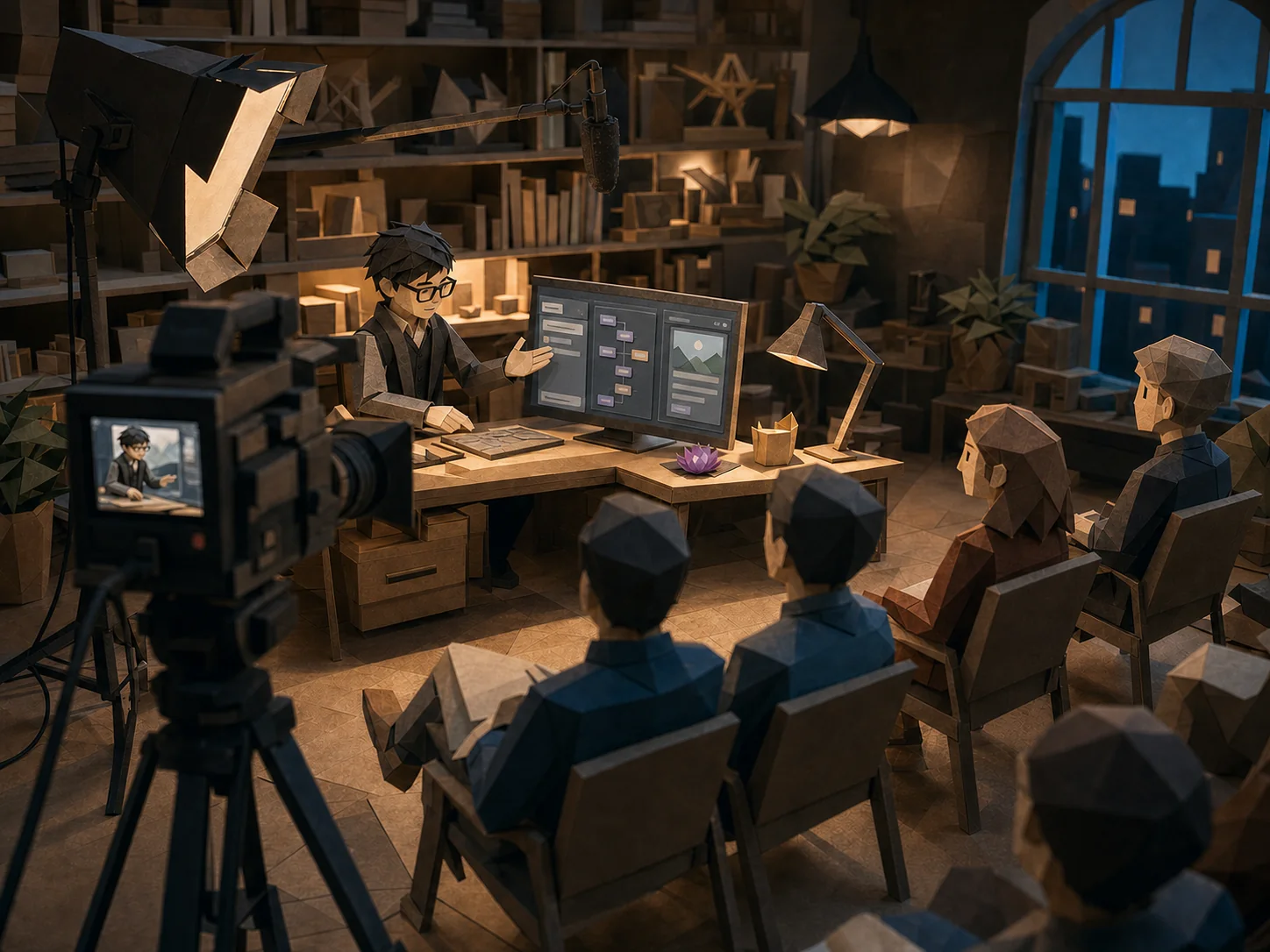
A few years ago I was running a workshop for secondary-school teachers in Barcelona — people who'd spent decades in classrooms, genuinely skilled at explaining things. We'd spent the morning on what to do when students couldn't get started.
At some point I asked the room: "Before I show you a technique — what do you already do when a student is stuck?"
The room went quiet in a particular way. Not confused. Thinking. People who'd been nodding with easy confidence all morning suddenly looked like they were taking something apart.
After a minute, one teacher said: "I re-explain the task. More clearly."
Another: "I check whether they've read the instructions."
A third: "I show them a finished example."
Nobody said: "I ask them a question."
That was the technique I wanted to teach. But because I'd asked first, they found the gap themselves. I didn't have to point to it. Pointing would have been far less convincing than the finding.
The attempt counts even when you're wrong
What happened in that room isn't a facilitation trick. It's a cognitive mechanism that's been replicated in laboratories for decades, and it works whether you're in a workshop or sitting alone with a book.
Trying to answer a question before you receive the answer — even when your attempt is completely wrong — changes what you can hold. The brain creates something like an active slot: a prepared gap that wants to be filled. When the information arrives into that gap, it settles differently than if you'd been handed it cold.
Researchers call this the pretesting effect. The remarkable part isn't that the attempt helps you remember better. The remarkable part is that you don't have to get it right.
The reaching opens the window. The answer is what closes it.
Feeling like you've learned is not the same thing
This is the distinction most people never make, and it costs them years.
Mira — there's feeling like you've understood something, and then there's having understood it. One is information entering your head. The other is you being able to use it six months later — to teach it, build with it, apply it under pressure. They are not the same. Passive consumption — reading, watching, listening, highlighting — consistently delivers the first while quietly underdelivering on the second.
I spent years at university doing this efficiently. I covered a lot of material quickly. Six months later I could recover almost none of it. I'd been a tourist: saw the sights, took the photos, moved on. Nothing actually settled.
The shift happened in the south of Bogotá, teaching writing to twelve-year-olds.
These students didn't have the luxury of pretending to follow along. When they didn't understand something, they looked up and waited. Which meant I had to actually know, in real time, whether they understood — not assume it.
I started asking them questions before explaining anything. Not to test them. To find out what they already thought — however incomplete.
What do you think a metaphor is?
If you had to argue something in an essay — what would arguing even look like, in writing?
If there were no instructions, what would your first move be?
Something changed. They had a stake in the answer in a way that most learners don't. When I explained, it confirmed or redirected something they'd already started building. It became theirs differently.
I didn't understand the mechanism at the time. I just noticed: the lessons where I asked first were the ones where they remembered.
What to do with the next blank page
The practice reduces to three moves. All of them require tolerating a moment of not knowing — which is why most people skip them.
Make the attempt before you look. Whatever you want to understand — explain it to yourself first. Write a paragraph. Draw a rough sketch. Say it out loud. It will be incomplete, probably wrong, possibly embarrassing. That's not a problem. That's the mechanism. Read the actual explanation after, and find where you were off. The gap between your attempt and the answer is where the learning lives.
Ask the deeper question, not the surface one. The question you're asking when you're stuck is almost never the real one. "How do I do this?" is usually a proxy for "What am I actually trying to make here?" or "Which part am I afraid of getting wrong?" Sitting with the deeper question for a minute tends to unstick the surface one.
Hold the discomfort of not knowing. The reflex is to reach for an answer immediately — search, ask someone, skip to the summary. Resist it for two minutes. Let the question actually form. The mild friction of not knowing is not something to escape. It's the slot opening.
You already know more than you think
The teachers in that Barcelona room found their own gap. That moment — discovering something you didn't know you didn't know — belongs to you in a way that information delivered to a passive mind never quite does.
Most of what we were taught about study was about receiving: read the chapter, watch the lecture, review the notes. The part that was almost never taught was the attempt before — the reaching, the wrong guess, the hand in the air before the answer is there.
You already know more than you think you know. And what you don't know will settle harder if you make space for it first.
Ask first. Especialmente entonces — especially when you're sure you don't know.