Curious Past the Age They Tell You to Settle
Most of us stopped following our questions long before we noticed — and called it growing up.
Field note · 11 November 2025 · 4 min read
There's a woman in my neighbourhood in Barcelona who's been learning oil painting for three years. She paints slowly. She paints badly, by her own cheerful admission. She has no ambitions to exhibit. She started because she'd always wondered what it felt like, and she eventually ran out of reasons not to find out.
I think about her often when I'm trying to understand what curiosity in adults actually looks like — once you strip away all the ways we've learned to perform it without practising it.
The quiet trade most adults accept
At some point — hard to say exactly when — most people make a deal with themselves.
You stop being someone who asks basic questions and become someone who already knows things. You have a title, a domain, a set of competencies. Wandering outside that starts to feel irresponsible. Or at minimum, embarrassing.
This isn't a personal failing. Ken Robinson spent his career arguing that conventional education trains this out of us — schools built to produce people who stay in their lane, not people who keep asking inconvenient questions. His case was primarily about creativity, but he treated curiosity as its engine — the two inseparable. And the divergent-thinking data he built his argument on suggested the sharpest decline happens in childhood and early adolescence, long before adulthood.
I think he was right. I'd add only this: the habit reasserts itself if you let it.
But first you have to notice that you made the trade.
Performing curiosity is not the same as practising it
You can perform curiosity easily. Ask the occasional question in a meeting. Share an interesting article. Tell someone you've always meant to learn Portuguese.
What you can't perform is following the thread.
I'll be reading something about colour in European painting and end up learning about medieval trade routes for lapis lazuli, then about the economy of Venice in the fourteenth century, then I'm at the market buying ingredients for something I've never cooked, for reasons I can't fully explain. None of it was efficient. None of it was planned. Most of it turned into something.
The students I remember most clearly from years of teaching weren't the ones with the right answers. They were the ones asking questions that weren't in the lesson plan — an eleven-year-old who stopped mid-exercise to ask why some memories feel like they're in colour and others feel grey; a fifteen-year-old who interrupted a class on metaphor to ask whether feelings could be compared to physical sensations, or only to other feelings.
We called that disruption. We eventually rewarded them for stopping.
Somewhere between secondary school and thirty, curiosity gets rebranded as distraction. Most people accept the rebranding. They call it focus. They call it maturity.
The filing system is where it goes to die
Mira — here's the distinction worth sitting with.
You can feel the pull of an interesting idea and file it under "someday." You can find something genuinely fascinating and move on in thirty seconds because there's always more to scroll past. That feeling — the initial spark — is real. But it isn't curiosity. It's potential curiosity. The kind that lives in the drawer.
Researchers who spent decades asking people at random intervals what they were doing and how they felt found something consistent: the moments people described as most absorbing weren't rest or comfort. They were the moments where challenge and skill were both high and closely matched — demanding enough that full attention was required, but within reach of what the person could actually do.
Following a question into territory you haven't mapped is how you manufacture those moments. Not because it's efficient. Because it's the condition under which you feel most real.
The filing system — that habit of muttering "interesting, someday" and moving on — is where curiosity goes to die. Not because the ideas aren't worth pursuing. Because someday reliably doesn't arrive.
The practice is smaller than it sounds
Staying curious as an adult isn't about recapturing something childlike. It's not performing wonder, or pretending you don't already know things.
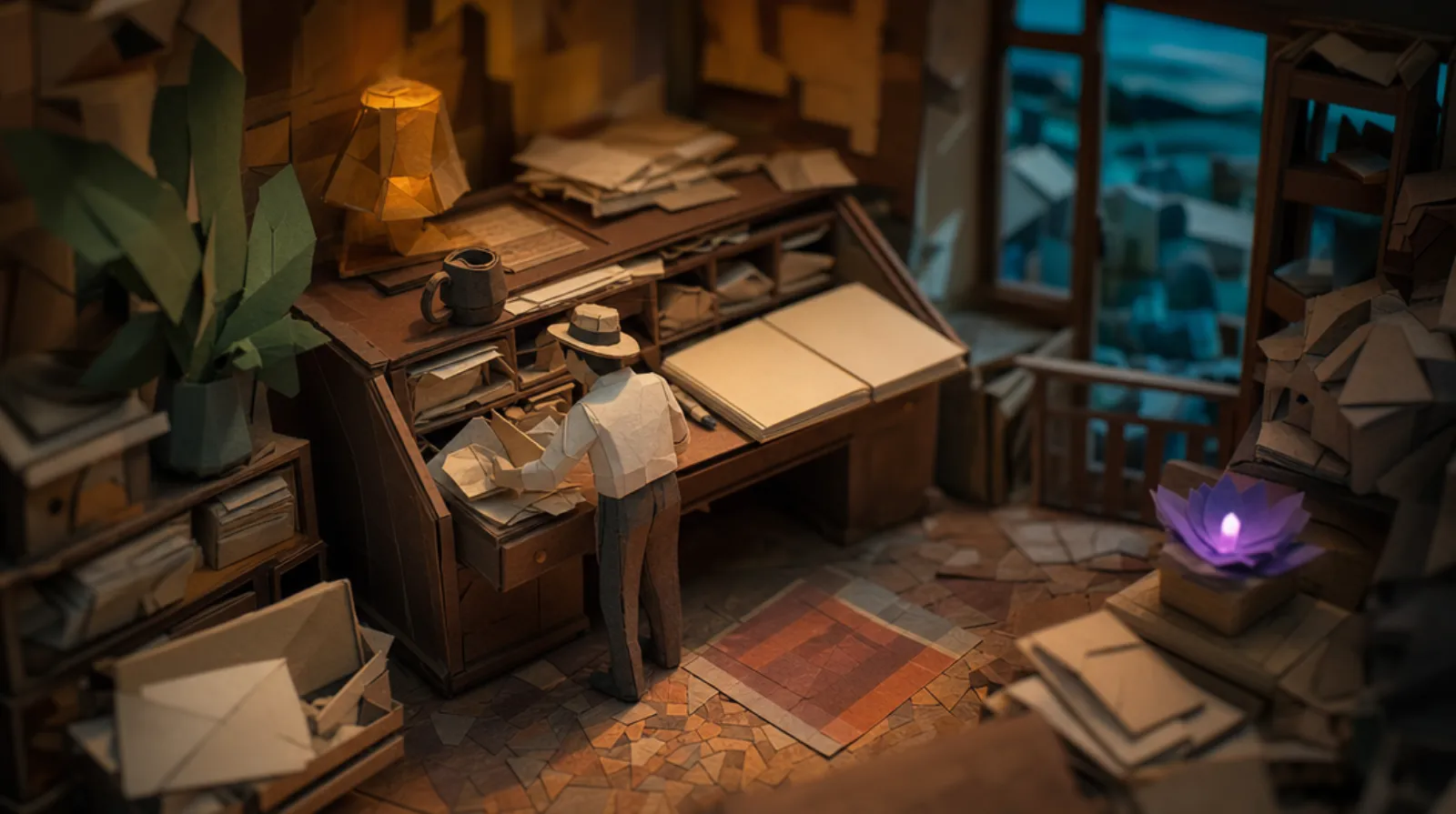
It's more specific than that: keeping the habit of following a question into territory you haven't already mapped. Small, repeated decisions to ask instead of assume. To try the thing you're only moderately sure you'll be good at. To read the footnote. To turn the piece over and look at the back.
What I've learned — from teaching, from wrong turns between Bogotá and Cambridge and here — is that curiosity is less a trait and more a practice. You either exercise it or it stiffens. Not the interest, not the spark. The capacity to act on it.
There's a version of adult seriousness that treats intellectual wandering as a luxury you'll get back to later, when things slow down.
Things don't slow down.
She paints in the afternoon light
My neighbour paints slowly, in a window that gets good afternoon light. She paints badly, and she paints happily, and when she talks about it she sounds like someone who discovered a room in her own house she hadn't noticed was there.
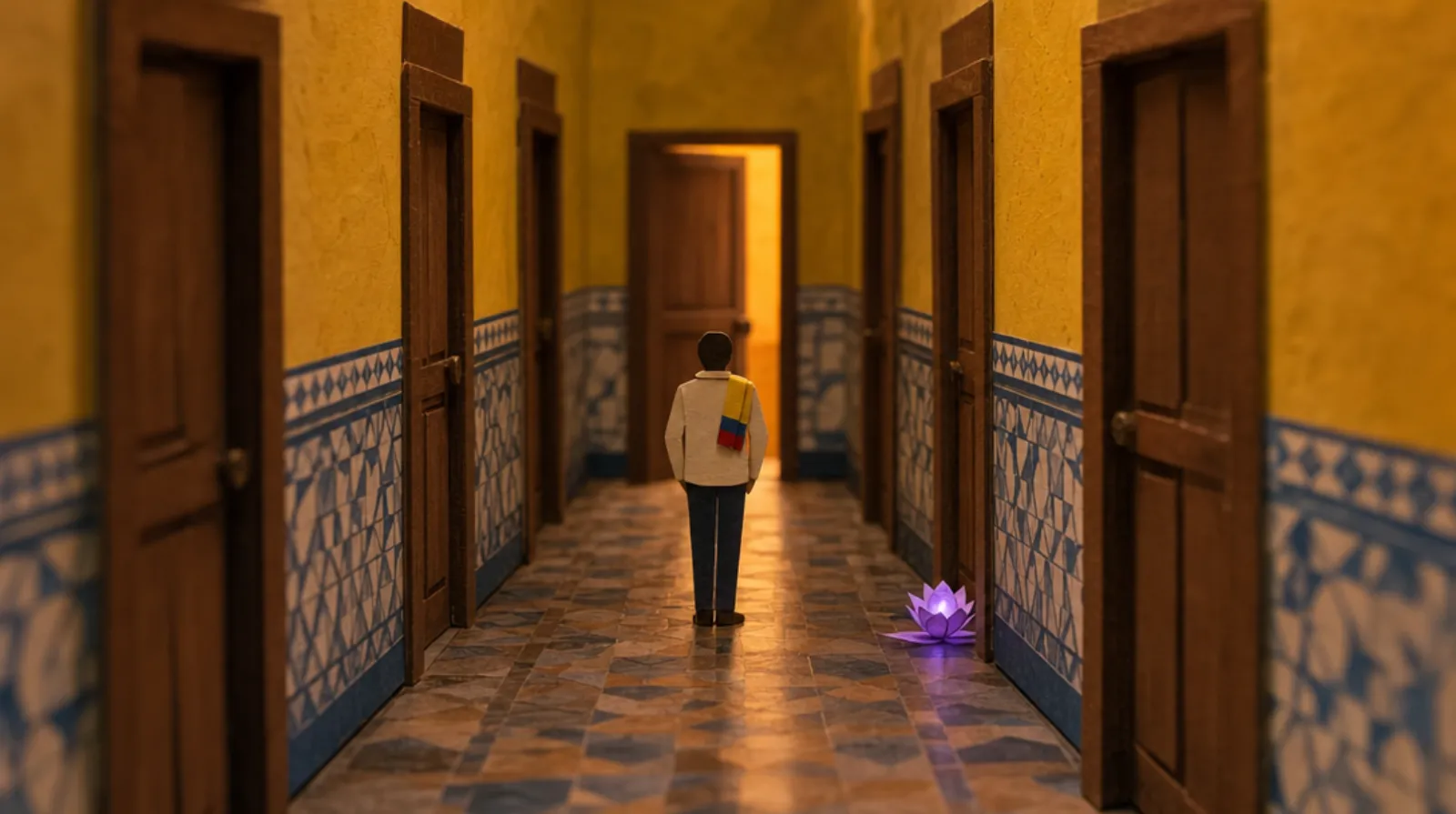
That seems to me like the right ambition for a curious life. Not mastery. Not efficiency. Just the continued willingness to open doors you haven't opened yet — even the ones you're almost certain lead nowhere.
Exacto.