Taste Is a Skill, Not a Gift
Taste isn't innate — it's a trained diagnostic faculty, and most people skip the part that actually builds it.
Guide · 17 March 2026 · 6 min read
She'd been in the industry seven months. The references in her deck were right — Saul Bass, an early Muji catalogue, a film poster she'd found at a market in Portobello Road. All considered, all correct. And the executions she'd built from them were off. In some way I could feel before I could name.
She was watching me. She already knew.
I had to say which seam was showing — not "this isn't working," which tells you nothing, but exactly where and what: the type was carrying weight the image couldn't hold. The hierarchy was inverted. The pause between elements was a gap, not a breath. The sentence had to be specific, or it was useless to her.
That moment — where you feel the wrongness and then have to produce language for it — is what I mean by taste. Not a feeling. A trained diagnostic argument.
Taste is not a gift. It's a verdict.
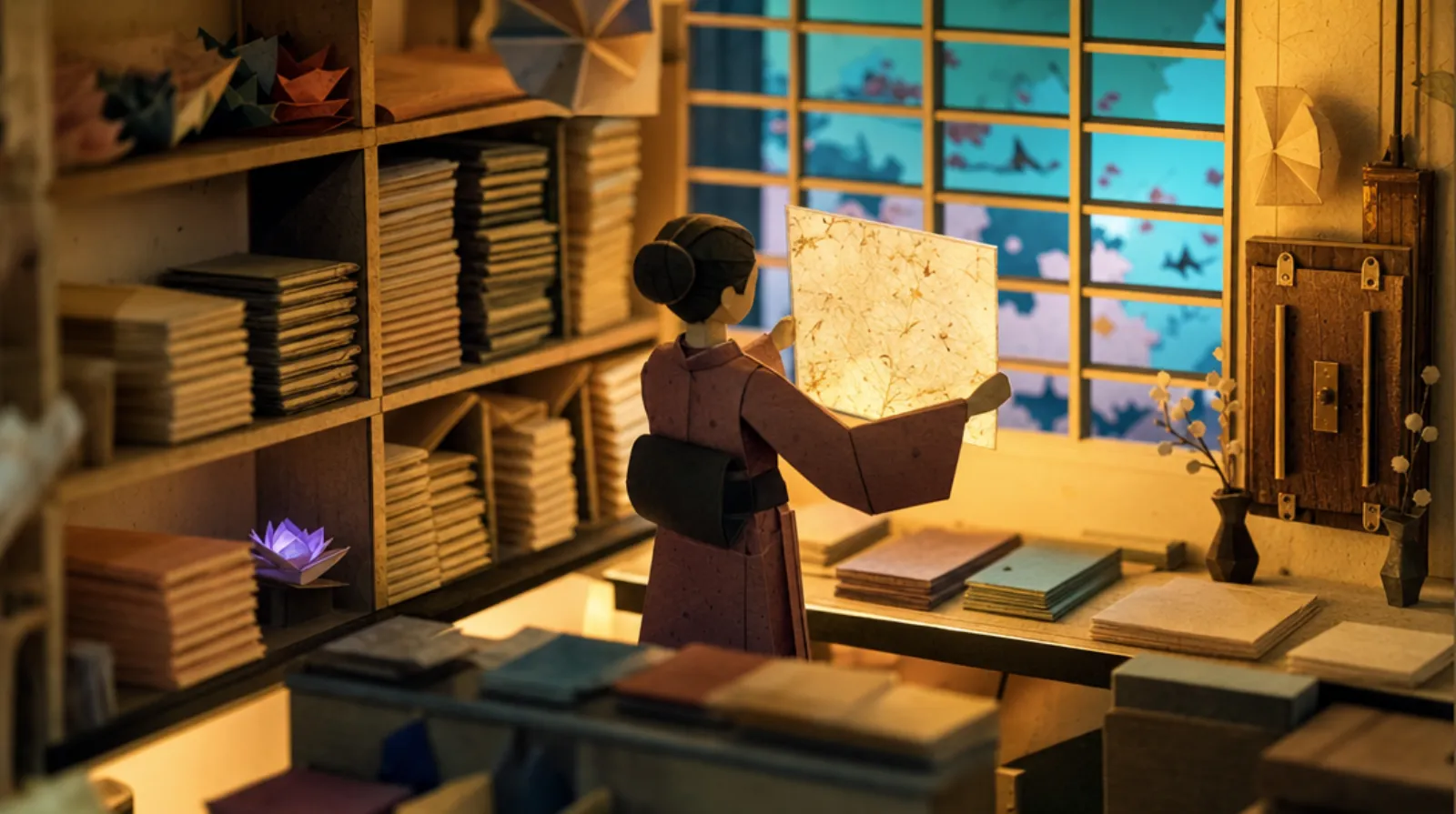
The most useful lie in creative work is that some people are born with taste and others aren't. It's useful for the people who already have it, because it closes the door behind them. And it lets everyone else off the hook from building it.
Taste is the capacity to produce a precise verdict on work. Not "I like this" or "this feels off" — what, where, and whether it can be fixed. That capacity is trained, not inherited. The training is specific, and most people skip it.
The gap is the work
Ira Glass said something true about creative practice: the early years are a taste gap. Your sense of what's good arrives before your ability to produce it. The gap is uncomfortable. Most people experience it as failure and stop. The people who stay, close it.
The part Glass doesn't press hard enough — it's there, though, if you listen — is that the taste has to arrive first. You can't close a gap you can't see. Building taste is building the thing that shows you the gap.
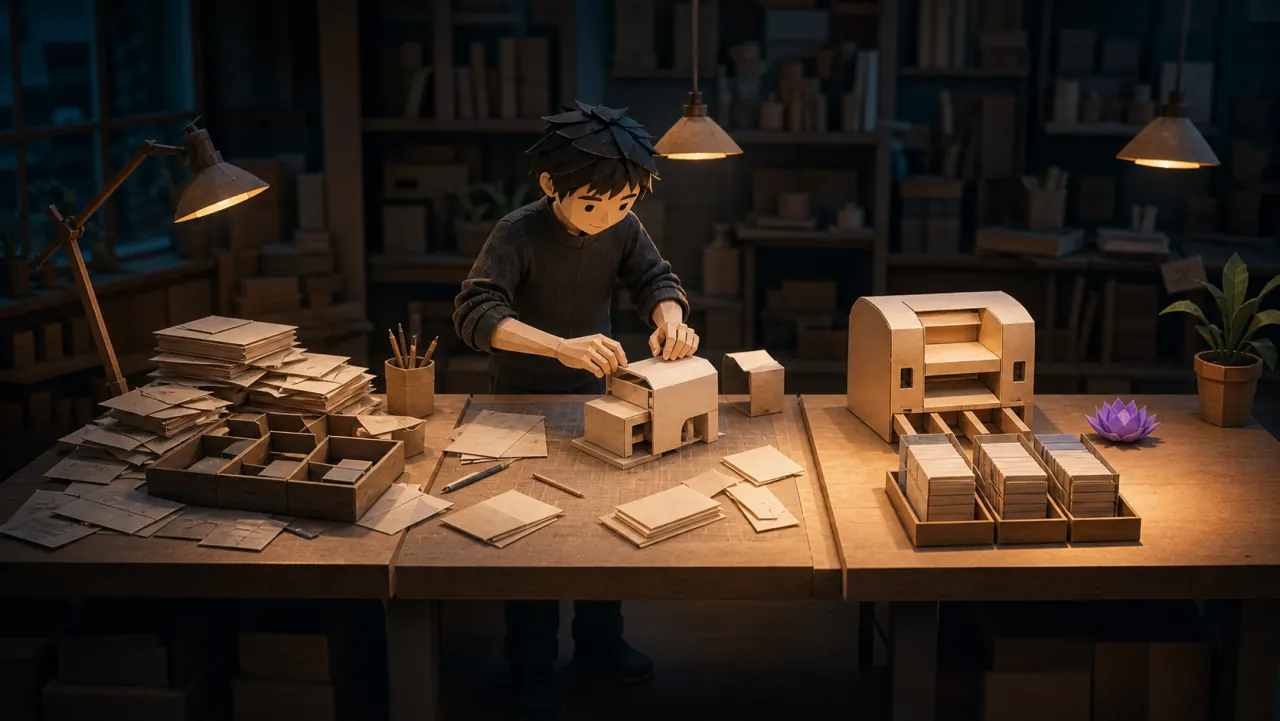
How? Not by watching. Not by looking at good work and waiting for it to rub off. Through structured comparison — the slightly tedious practice of asking, every time, with every piece of work: why does this work and that doesn't?
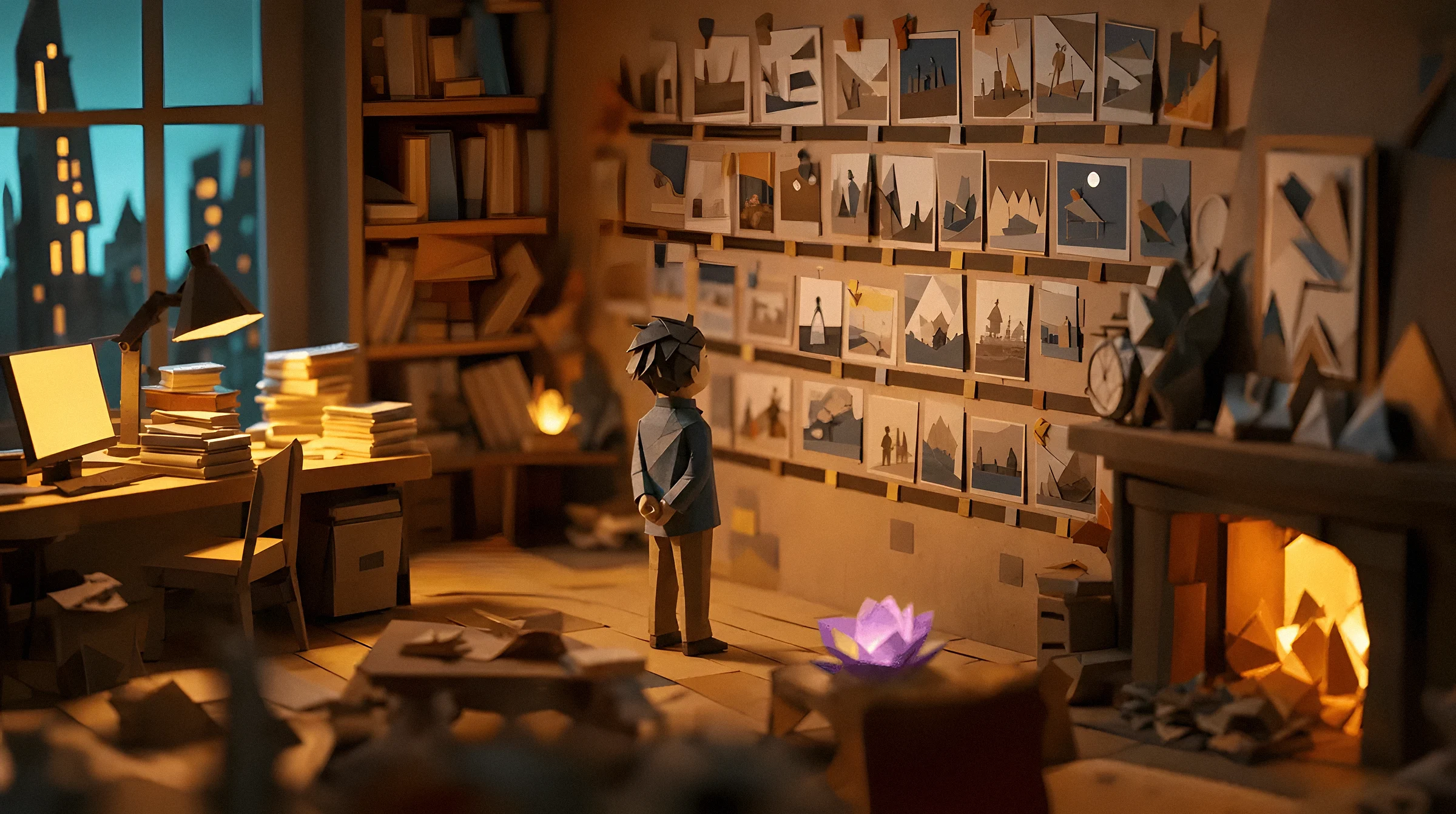
I stop in front of things. It's an annoying habit in group settings. A poster on the Tube, a menu cover, a logo on the recycling bin outside a studio. I make myself produce a sentence before I move on. Not "nice" or "ugly" — why. The type has too much weight relative to the illustration. The colour palette is coherent but the hierarchy puts the wrong element first. The sentence doesn't have to be correct. It has to be specific.
A reference folder is not a vocabulary
Here's where most people stall. They go to exhibitions, curate boards, follow the right accounts. Necessary. Nowhere near sufficient.
Passive consumption builds a reference library. Active comparison builds taste. The difference is friction — the discomfort of doing the analysis in real time, not in retrospect, not in the comfortable quiet of your own annotation.
Barthes called it the punctum — the detail in a photograph that wounds you in a way that escapes naming. Everyone has punctum responses to images. Most people stop there, leave the response unexamined. The practice of building taste is what happens after: you press on the wound. You work out what it's doing, what formal choice it represents — even if that effect cannot be intentionally reproduced.
Look at something you hate and name what's actually wrong with it — specifically, at what scale, in what sequence. Then take something you consider close to perfect and find where it would break. This is the part that strips some of the pleasure out of looking. For a while. Then the pleasure comes back differently — you feel what's working and understand it simultaneously, the two experiences collapsing into one.
That collapse is the muscle doing something.
間 — what's in the pause
The Japanese word 間 (ma) names the negative space between things — the pause that allows meaning to land. Most creative work fails not because it says the wrong thing but because there is no ma. Too much, too fast, no room for anything to settle.
Good taste includes the ability to perceive ma. To feel the space that should be there and isn't — or to feel the pressure of what's filling space the work needs empty. A brief with no ma is a brief with nowhere for the creative to go. A piece of work with no ma talks past its audience because it never stopped long enough for them to arrive.
You build taste partly by learning to hear the pause. Where to leave the room empty.
Once you see the seam
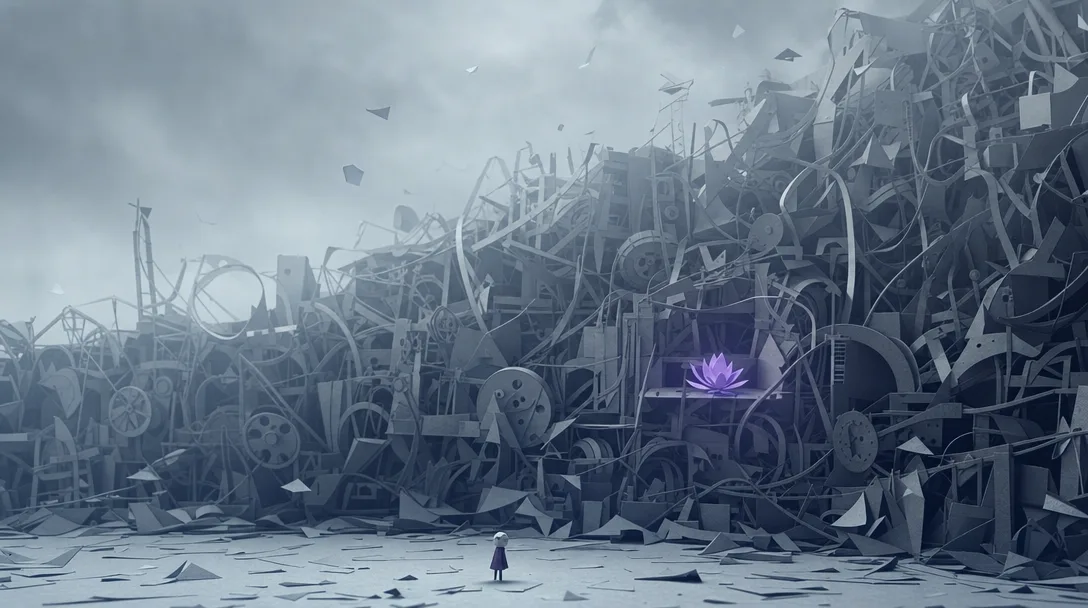
The cost nobody prepares you for: when the faculty is working, you can't suspend it. You see the seam in your own work — the sentence that's almost right, the frame that's off by a beat — and you can't un-see it. The gap has moved inside the room you're working in.
Kiko sits next to me while I edit scripts. She's thirteen kilograms of Shiba Inu and she tilts her head at exactly the passages that deserve another pass. She's been right every time. I've stopped pretending she isn't giving editorial feedback.
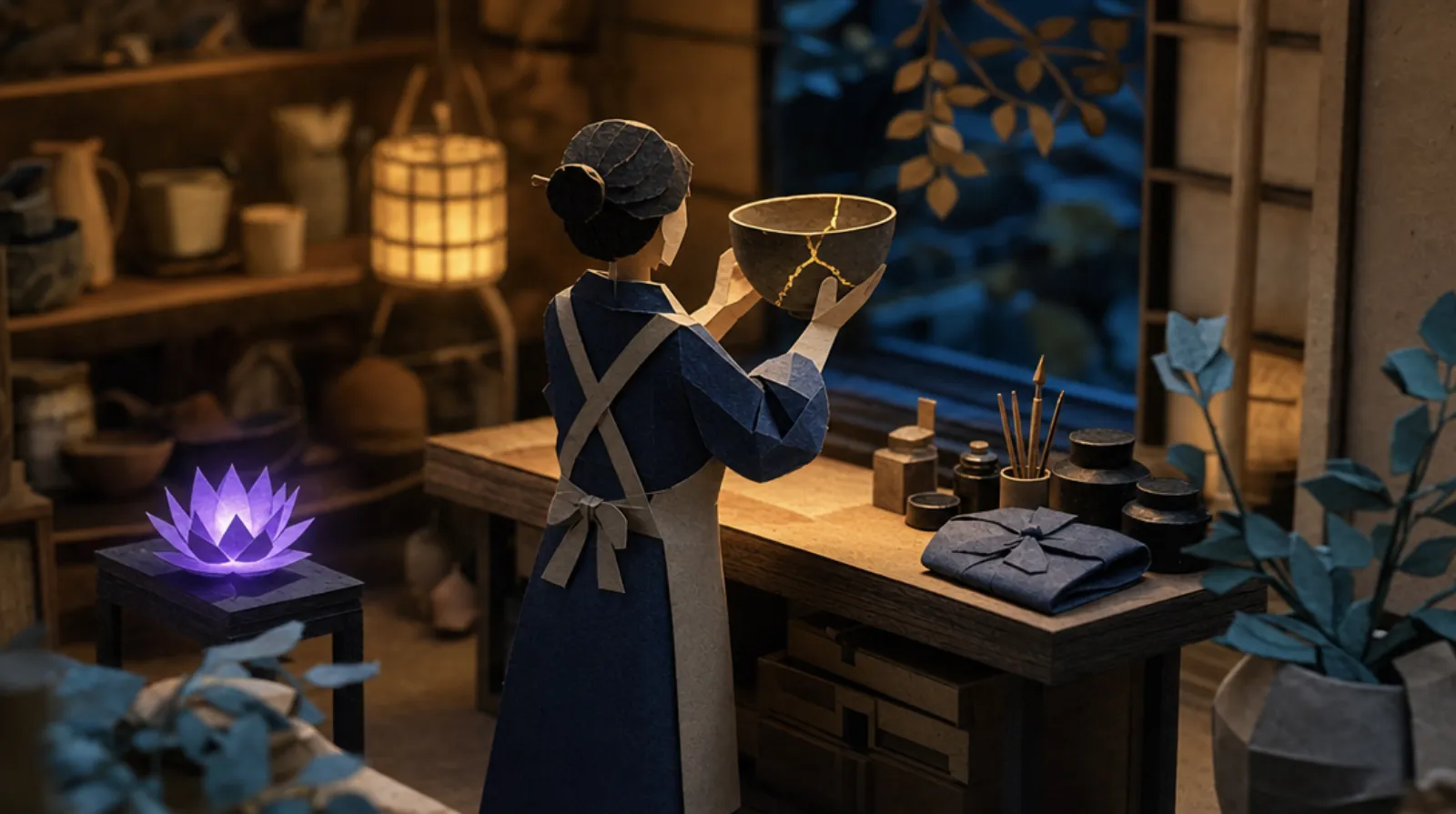
There's a Japanese practice called kintsugi — repairing broken pottery with lacquer gilded with gold powder, so the break becomes part of the object's history rather than a defect to hide. The cracks in your own work are kintsugi moments: not evidence the faculty is absent, but evidence it's working. The answer isn't to become blind again. It's to close the gap.
What actually trains it
Study a field adjacent to yours. If you work in brand, spend a year with architecture — the way structural decisions made early determine what's possible at every surface below. If you work in film, study theatre. The constraints differ enough that the comparison reveals what your own medium is doing that you've been too close to notice.
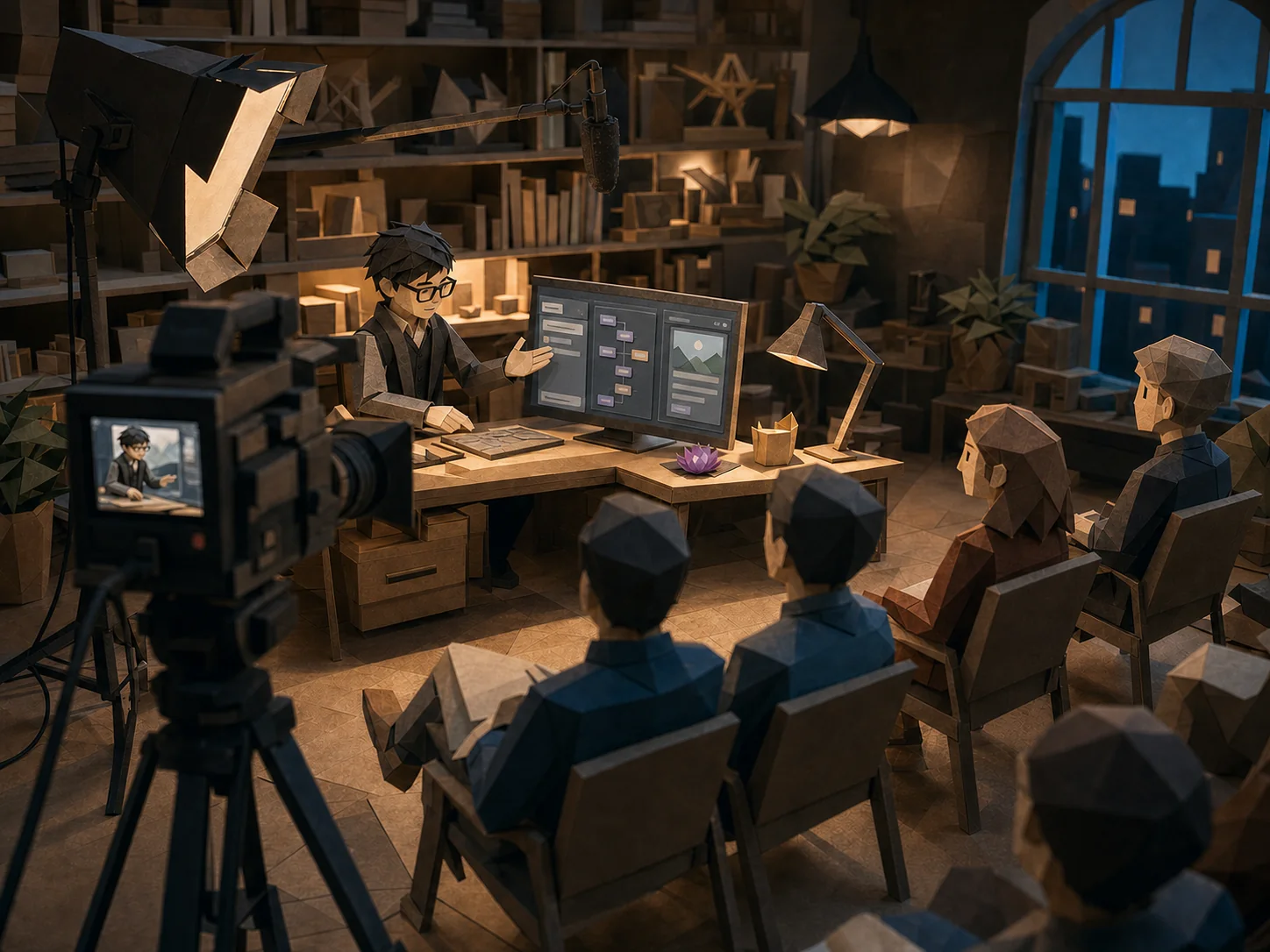
Find one person whose taste you trust and argue with them regularly. Not to win — to stay honest. Taste in isolation calcifies. In dialogue, it stays alive.
And commit to the specific sentence. Every time. Not "I don't like it" — what, where, why, and whether it can be fixed. It feels forced for longer than you'd expect. Keep going.
What it becomes
The gap Glass describes doesn't close. I don't think it's meant to.
What changes is your relationship to it. The seam stops being the thing that makes you want to put the work down and starts being what keeps you returning to it. The junior I sat with that afternoon already knew the deck wasn't right. That knowing was the faculty functioning. The executions were the gap. She had the harder, more valuable thing already.
I told her that. I'm not sure she believed me.
She does now.