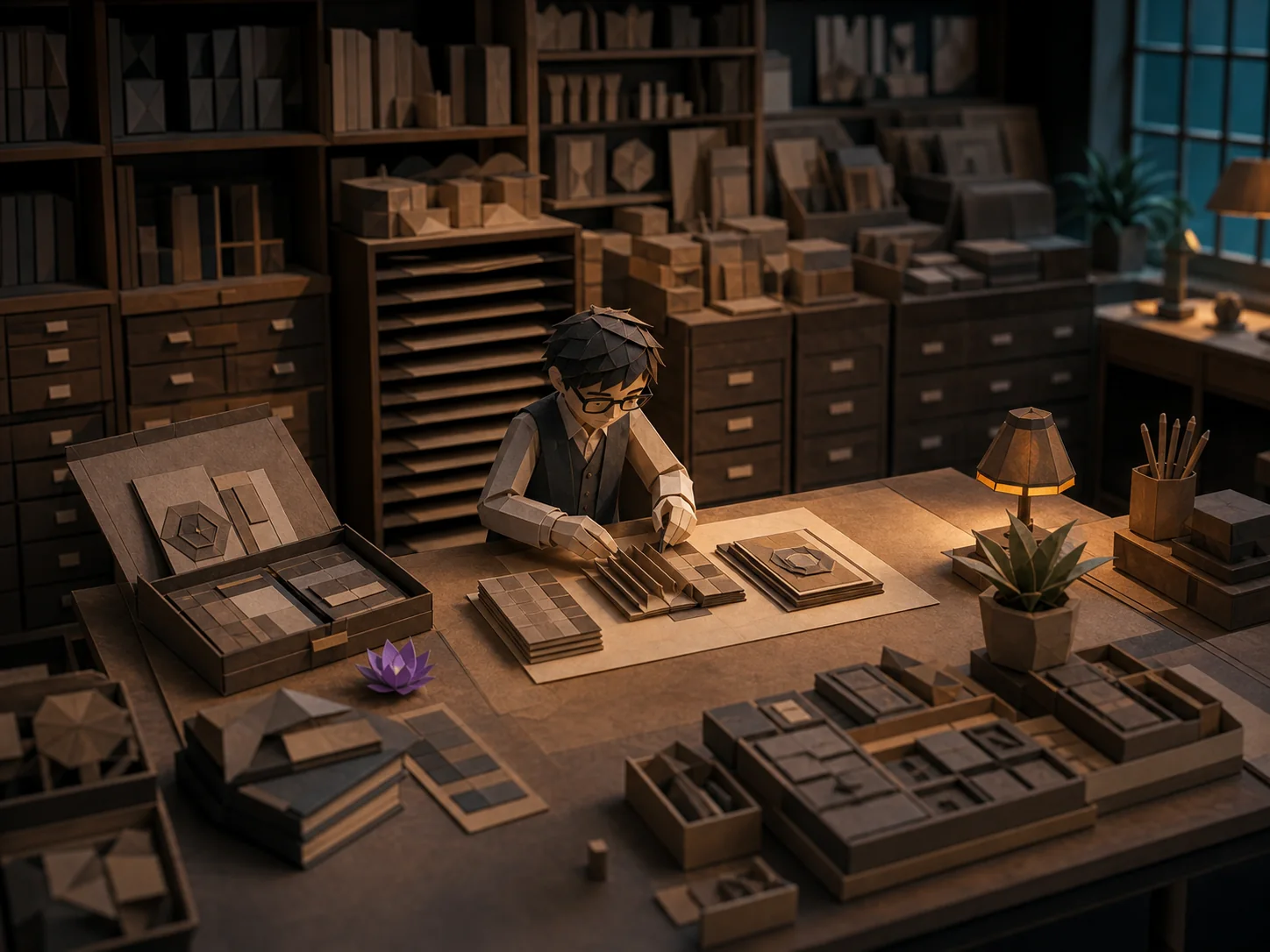
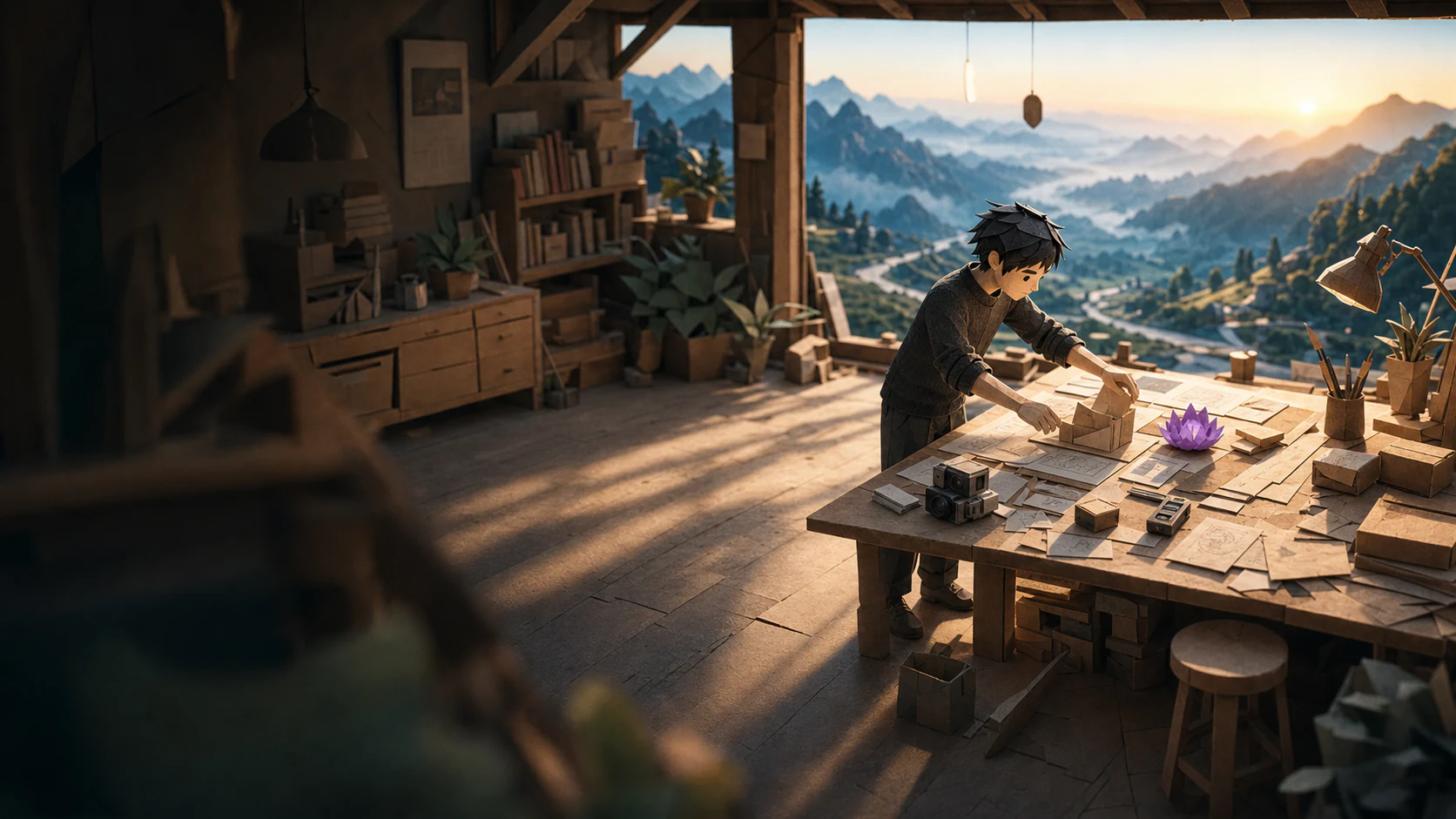
A Home Is Tended, Not Decorated
Decoration is for photos. Tending is for living. The difference is the whole reason your space does — or doesn't — hold you.
Essay · 13 April 2026 · 6 min read
There's a particular quality of light in my Copenhagen apartment on Sunday mornings — flat, northern, without mercy — that I've never tried to photograph. The plants don't look their best in it. The wool blanket on the reading chair has a pull in it. The coffee ring on the table has been there since Thursday, because I like where I set my cup and I'm not ready to change that yet.
None of this makes it into anyone's mood board.
I think about that gap often: the home that photographs and the home that holds you. They can overlap — plenty of beautiful things are also loved and worn in exactly the right ways. But when they diverge, most of us have been trained, without anyone quite saying so, to choose the photograph.
My grandmother never decorated her house
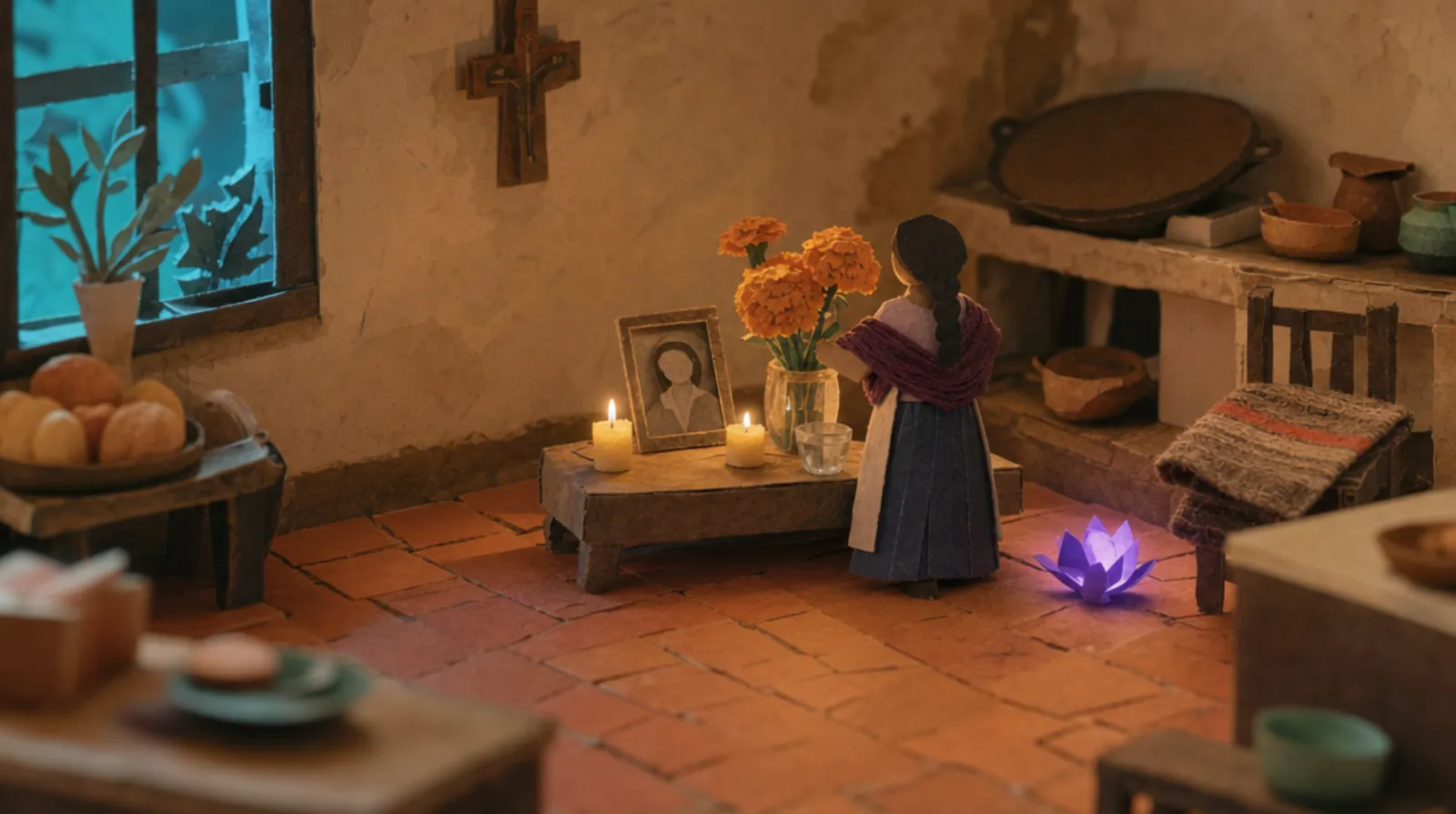
Her house in Oaxaca was a working house — rough plaster walls, terracotta floors that held the cold of early morning and the warmth of late afternoon in different rooms depending on the hour, a kitchen that always smelled of something on the comal. At the centre of the main room, she kept her altar.
Not tucked in a corner. Not moved when company arrived. Set at the centre.
She refreshed it every week: marigolds from the Saturday market, a photograph of my grandfather, two small candles, a glass of water. For Día de los Muertos it became something overwhelming — thick with flowers and fruit and smoke, the whole room reorganising itself around what it remembered. But on an ordinary Tuesday it was still there, saying something wordlessly about what this house was for. Not to impress. Not to signal taste. To hold the people who had lived there and the people still living in the same warm, unbroken attention.
If she had a creed, this was it — though she never said it out loud: Sin altar, no hay hogar. Without an altar, there is no home.
I didn't have language for what she was doing until I moved north. Meik Wiking, in The Little Book of Hygge, writes about hygge as an atmosphere and feeling — one built through shared rituals rather than through objects or décor. What struck me wasn't the candles or the heavy throws, though I have both, in quantity. It was the emphasis on repetition — on returning to the same small things in the same places until the places themselves begin to carry the feeling.
My grandmother had been doing exactly that her whole life. She just hadn't written a book about it.
Tending means you have to look
Decorating is an event. You make decisions, spend money, place things, step back. It's largely finished. The home becomes a backdrop — scenery for the life you intend to live there.
Tending is something different in kind, not degree. It's staying in relationship with your space: noticing what's working, what's stopped working, what needs moving, what needs to go.
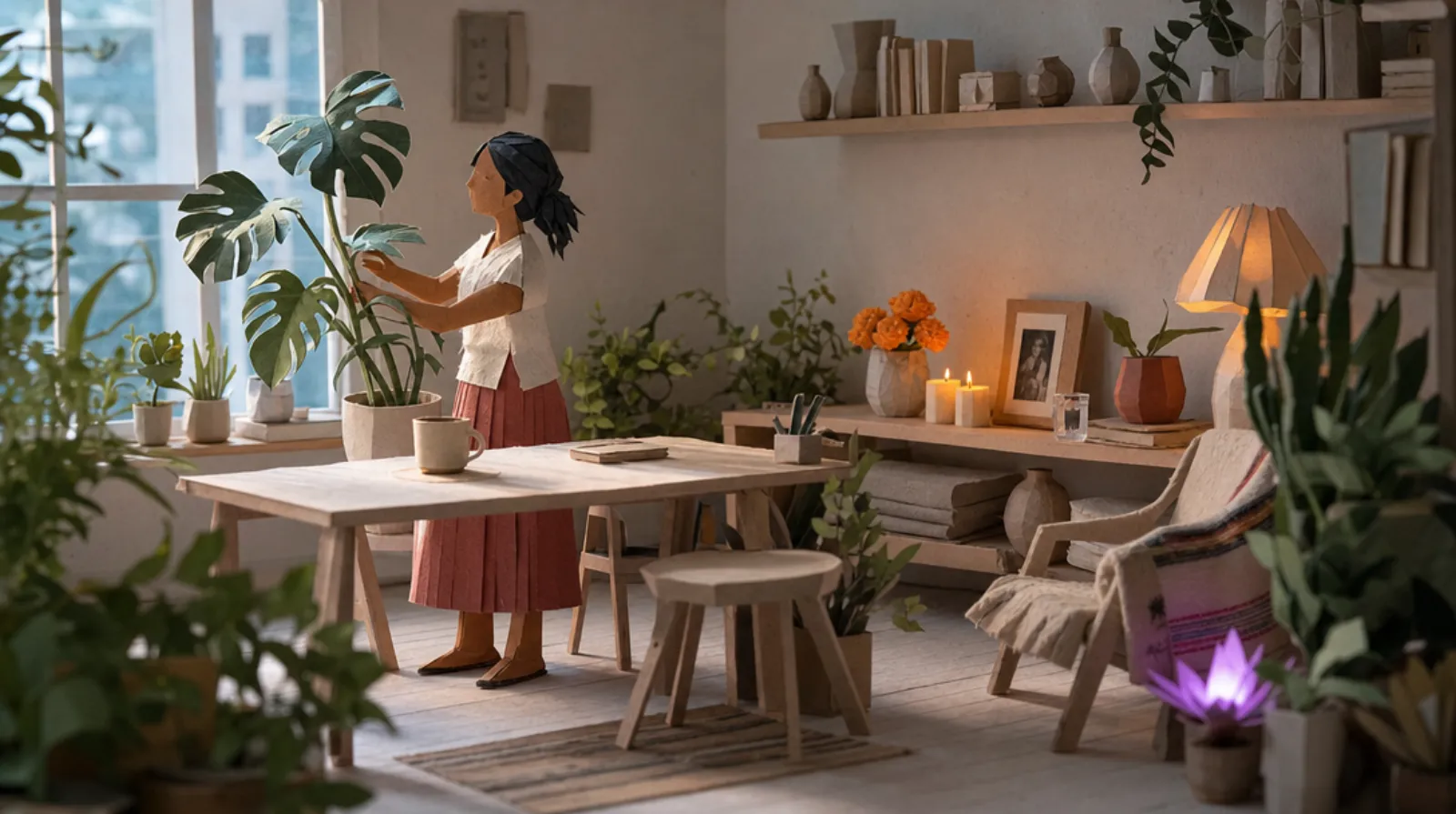
My plants have taught me more about this than anything. I have about forty of them now — a number that started as two and grew the way most real commitments do, slowly and then all at once. They require attention that is calibrated, not merely regular. The monstera near the east-facing window needs rotating every few weeks or it leans hard toward the light. The bird of paradise takes one long, deep drink and then very little — at least through a Copenhagen winter. There is no single schedule that works for all of them.
You have to look.
A home asks the same. The morning ritual of coffee at the kitchen counter — does it still feel good, or has it quietly become a chore you perform without meaning? The pile of books beside the bed — is it the books you're actually reading, or the books you intend to read? One of those piles holds you in something real. The other quietly deflates you each time you glance at it and reach for nothing.
Tending means asking those questions, and being willing to make small adjustments that cost nothing but honesty.
The specific acts are easy to dismiss because they're so ordinary. Dusting the altar not for cleanliness, but because handling the marigolds, straightening the photograph, checking the candle keeps you in contact with what you placed there and why. Watering the plants with enough attention to notice the colour of the leaves, whether something is off. Opening the windows on the mornings the room needs it, not on a schedule, because you've learned to read what the room is asking.
These aren't cleaning. They're something closer to conversation. Over time, that exchange builds what I can only call a quality of presence in a space — as though the room has learned, through repetition, how to receive you.
The long table is mine
When I first moved to Copenhagen, I spent several months trying to make my apartment look like the Nordic interiors I'd been admiring: spare, pale, rigorously minimal. I bought things. I removed things. I photographed corners. The apartment looked correct.
It felt like wearing someone else's shoes. Elegant shoes, carefully made, but shaped for a different foot.
What I actually needed was my grandmother's logic in a different climate. Less terracotta, more grey winter light. Less altar smoke, more candle wax. The same commitment to a centre — to saying, through how things are arranged, what this home is for. My centre turned out to be the long table where I write and eat and have friends stay for hours. The plants have moved toward it over time, pulled by the light and by the life. The afternoon sun falls across it in a way I've arranged everything else to protect.
Someone else's home has a different centre. A kitchen corner that catches the morning. A piano that anchors the room even when nobody's playing it. A child's drawing pinned where it was pinned because that was right, and nobody has moved it. The form varies. The act is the same: choosing what the home is for, and returning to that choice each day.
The flat northern light on Sunday mornings doesn't photograph well. Neither does the coffee ring that's been there since Thursday, the wool blanket with its pull, the forty plants looking a little less than their best. But that room, on that morning, holds.
A decorated home is finished. A tended home never quite is.